Midnight Vigil at the Shrine
Under the vast, star-dusted canopy of a Silla Dynasty night, a profound quietude enveloped the small village nestled at the foot of Mount Namsan. The usual daytime sounds of laughter, bargaining, and agricultural toil had long since faded, replaced by the rustle of leaves in the gentle breeze and the distant hoot of an owl. Yet, within the village, a single figure moved with deliberate, silent reverence towards the community’s small, unassuming shrine dedicated to the local mountain spirit. This was Master Jeong, the village’s spiritual guide and elder, a man whose face, etched with the lines of seventy winters, reflected a deep serenity and unwavering faith.
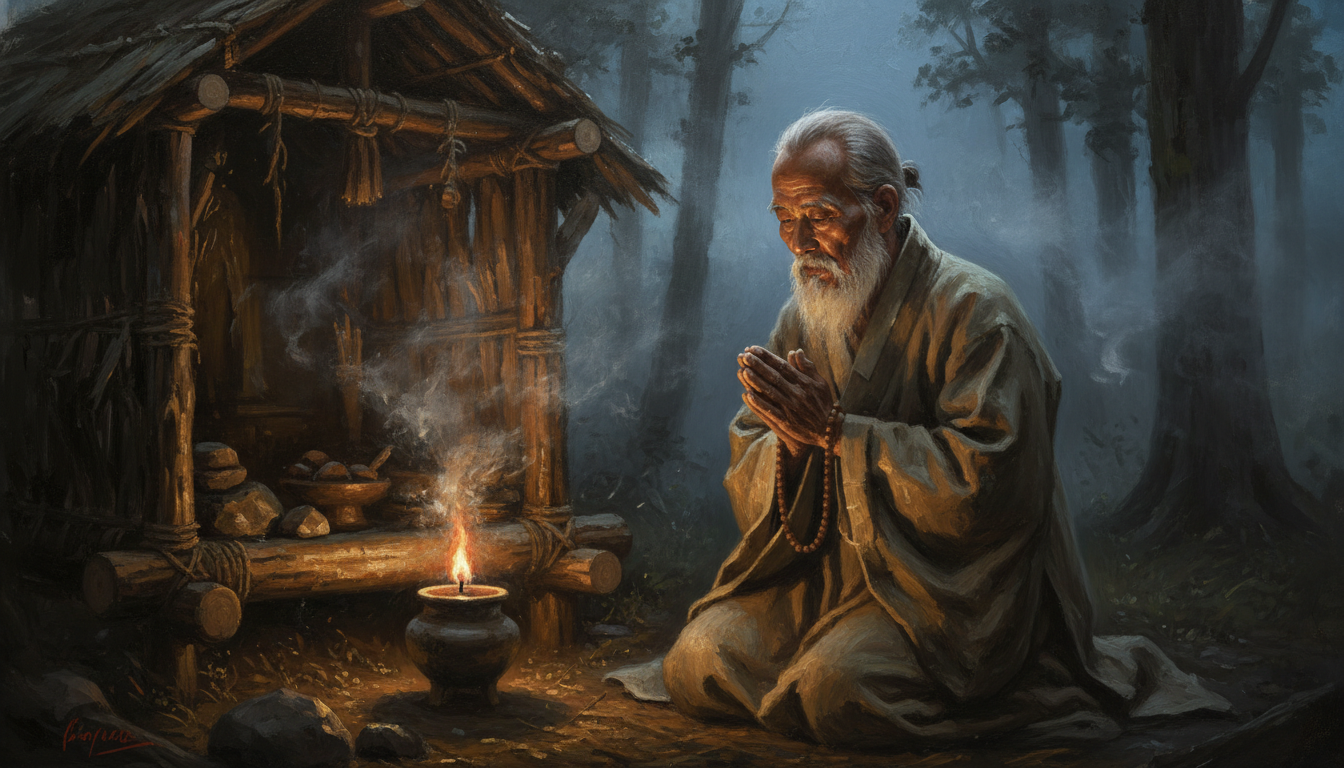
The shrine itself was a simple structure, a wooden pavilion with a thatched roof, housing a rough-hewn stone altar adorned with offerings left throughout the day: a small bowl of polished rice, a freshly picked persimmon, a handful of burning incense sticks whose fragrant smoke now curled upwards, mingling with the cool night air. Jeong carried a small clay lamp, its flame a beacon against the encroaching darkness. He approached the altar, his steps measured and soft, as if not to disturb the delicate balance between the physical and spiritual realms that night embodied. He placed his own offering: a carefully crafted paper prayer, inscribed with the villagers’ hopes for a bountiful harvest and protection from illness, and a fresh cup of rice wine.
Kneeling before the altar, Jeong closed his eyes, his breathing slow and even. This midnight vigil was a personal ritual, but one deeply intertwined with the well-being of the entire community. Psychologically, these solitary hours were a crucible for his faith, a direct communion with the unseen forces he believed governed their lives. He felt the weight of his villagers’ trust, their silent pleas carried on the wind, and he bore them to the spirits. He might whisper incantations, ancient phrases passed down through generations of shamans and spiritual leaders, or simply allow his mind to empty, becoming a vessel for divine communication. The air grew colder, and a shiver ran through him, but it was not from fear; it was the chill of the sacred, the proximity of the supernatural. The flickering lamp cast elongated, dancing shadows that seemed to embody the spirits themselves, giving life to the inanimate.
Jeong’s devotion was not merely an act of duty; it was a deeply personal journey into the heart of his spiritual beliefs. He believed that the night, with its veil of mystery and quiet, was when the spirits were most accessible, when the human world drew closest to the divine. The mundane worries of the day receded, replaced by a heightened awareness of the cosmic order. He might recall moments of communal joy—a successful hunt, a child’s healthy birth—and offer thanks. He might also reflect on communal sorrows—a failed crop, a sudden illness—and offer supplications for solace and intervention.
As the hours stretched towards pre-dawn, the stars began to dim. The incantations, once soft murmurs, gave way to a profound silence. Jeong remained kneeling, his gaze fixed on the altar, a picture of unwavering devotion. The ritual concluded not with a grand pronouncement, but with a quiet, inner sense of peace and renewed purpose. He rose, his aged joints creaking softly, and extinguished his lamp, allowing the soft, nascent glow of approaching dawn to fill the shrine. He left the offerings, a bridge between worlds, and slowly made his way back to his humble abode, his heart filled with the quiet conviction that his vigil had been heard, that the village, for another day, would be watched over. His silent journey back into the sleeping village underscored the unseen spiritual labor that often underpinned the daily rhythms of ancient Asian life.