Feast and Celebration

In a vibrant Joseon Dynasty village, nestled amongst rolling hills and rice paddies, the arrival of the annual Daeboreum festival—the first full moon of the lunar new year—transformed the usual quiet night into a spectacle of joyous celebration. This was a rare occasion, a collective release from the rigors of daily life, where the entire community gathered to partake in ancient rituals, communal feasting, and spirited entertainment.
As dusk settled, the central communal ground, usually a barren space, became a hive of activity. Villagers, dressed in their finest hanbok, moved with excited anticipation, their faces lit by the glow of hundreds of paper lanterns, strung across bamboo poles and hanging from tree branches. The air, usually carrying the scent of woodsmoke and damp earth, now hummed with the rich aroma of traditional foods: ‘ogokbap’ (five-grain rice), ‘yakbap’ (sweetened rice), and various ‘namul’ (seasoned vegetables), meticulously prepared throughout the day by every household. Laughter mingled with the rhythmic beat of ‘janggu’ drums and the lively melodies of ‘gayageum’ zithers, as musicians began to play, drawing people towards the central performance area.
Children, their faces flushed with excitement, chased each other, their small, colorful lanterns swinging wildly, casting dancing shadows. ‘Hurry, Father! The ‘nongak’ is about to begin!’ cried young Minjun, tugging at his father, Dae-ho’s, sleeve. Dae-ho, a robust farmer, smiled, his eyes twinkling with the communal joy. ‘Patience, my son. A good performance is savored, like a good meal.’ His wife, Sora, nodded, her hands full with dishes for the communal table.
The psychological impact of such festivals was profound. They served as vital social cohesion mechanisms, allowing villagers to strengthen bonds, resolve minor disputes, and reinforce their shared identity. For a night, the hierarchies of daily life softened, replaced by a collective sense of belonging and mutual well-being. The feasting was not merely about sustenance; it was an act of sharing, of prosperity, of reaffirmation of community.
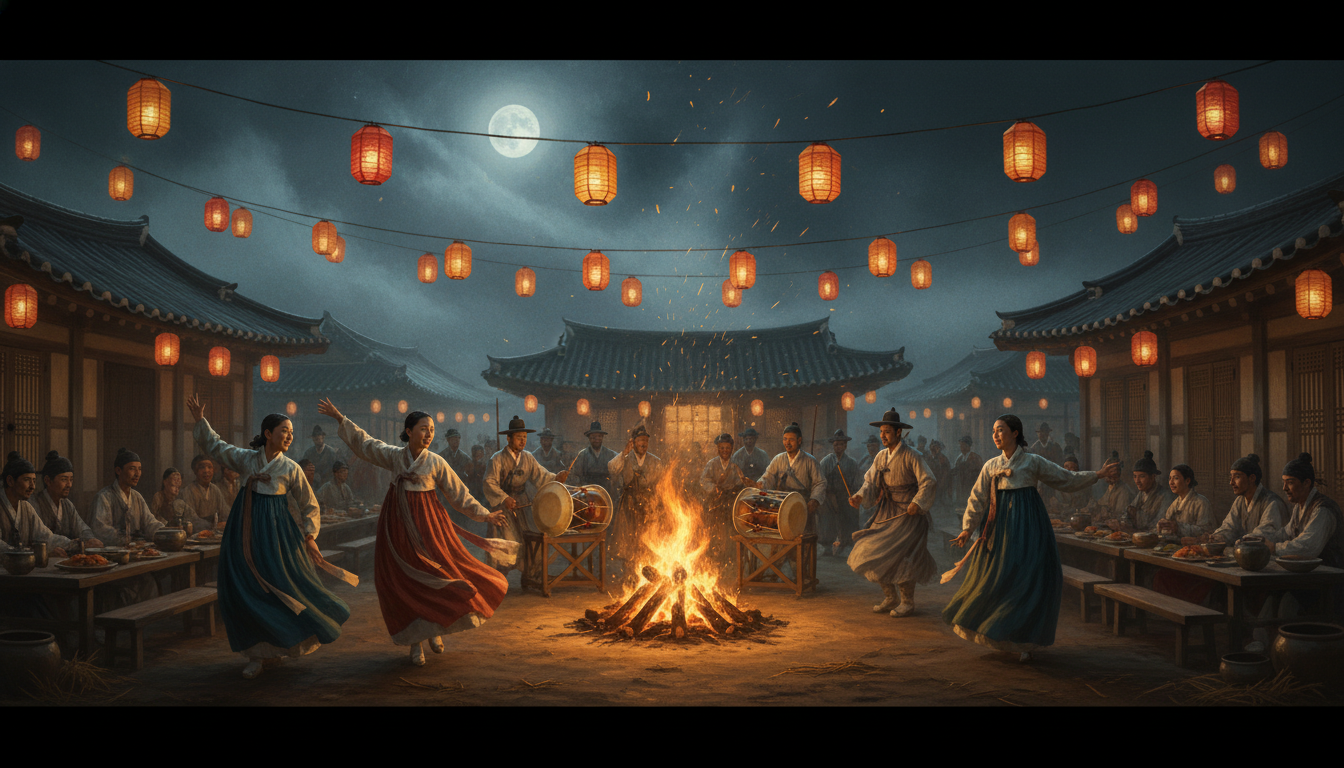
As the full moon ascended, a magnificent orb in the clear night sky, the ‘nongak’ (farmers’ music and dance) performance began in earnest. Dancers in vibrant costumes, adorned with long, spinning ribbons from their hats, moved with captivating energy, their movements telling stories of harvest, nature, and human resilience. The drummers pounded a relentless, exhilarating rhythm, pulling villagers into a communal trance. Many joined in the simpler dances, their movements less refined but no less enthusiastic. Old Grandmother Kim, usually quiet and reserved, found herself tapping her foot, a wide smile creasing her aged face. ‘Such spirit! Such life!’ she exclaimed, her voice surprisingly strong, to her neighbor.
Later in the night, the ritual of ‘daljip taeugi’ took place—burning a large straw effigy of the moon house. Villagers wrote wishes on paper and placed them inside, believing the smoke would carry their hopes to the heavens. As the fire blazed, casting a warm glow over the joyous faces, cheers erupted. It was a symbolic act of purification, casting away ill fortune and inviting prosperity for the coming year.
The dialogue amongst villagers was lively, filled with good-natured teasing, gossip, and shared reminiscences. ‘Remember last year’s rice wine, Old Man Park? Potent stuff!’ ‘Ah, but your wife’s ‘kimchi’ is still the best, Dae-ho!’
As the night deepened, and the first hints of exhaustion began to set in, the sounds softened, the dancing grew gentler. Families gathered around the embers of the communal fire, sharing warm drinks and quiet conversation. The festival would slowly wind down, leaving behind a profound sense of renewal and connection. The full moon, a silent witness to the revelry, had overseen a night where worries were shed, spirits were lifted, and the enduring strength of the Joseon village community was gloriously reaffirmed, preparing them with renewed vigor for the challenges and joys of the year ahead.