The Storyteller’s Shadow Puppets
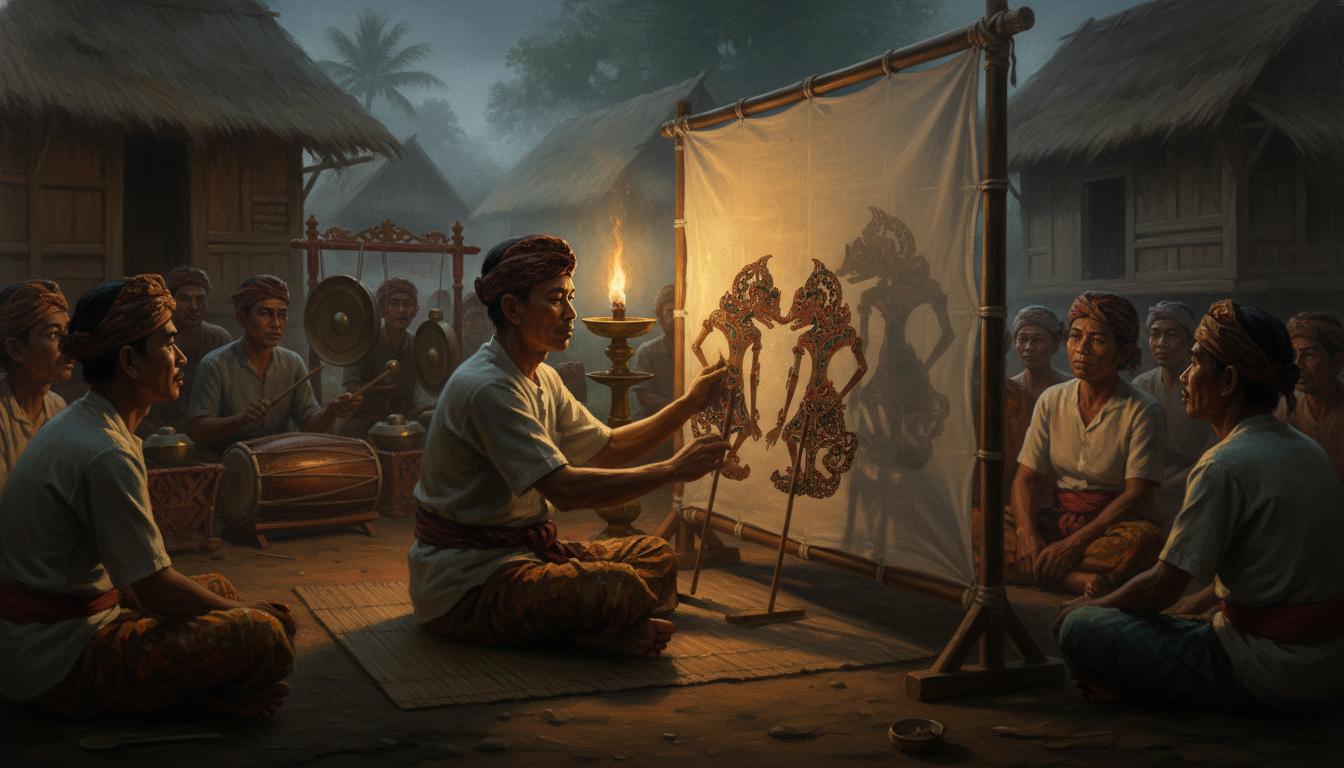
In a bustling village within the Majapahit Empire on the island of Java, where the air was thick with the scent of jasmine and clove, the deep enchantment of the ‘Wayang Kulit’ (shadow puppet theatre) was the most anticipated nighttime spectacle. Long after the daily chatter of the market and the clang of the blacksmith had faded, a special clearing on the edge of the village would come alive. Here, under the watchful gaze of the rising moon, Master Dalang Surya prepared his intricate screen and flickering oil lamp, ready to transport his audience into a world of gods, heroes, and demons from the ancient Hindu epics, the Mahabharata and Ramayana.
Surya, a man of profound wisdom and theatrical flair, was more than just a puppeteer; he was a philosopher, a comedian, and a spiritual guide, all rolled into one. His hands, gnarled with age and countless performances, moved with an almost magical dexterity, manipulating the meticulously carved leather puppets. The screen, a large white sheet stretched tautly across a bamboo frame, became the stage. Behind it, a single coconut-oil lamp, its flame carefully adjusted, cast the shadows of his puppets onto the screen, bringing them to vivid, dramatic life.
The audience, a mix of old men with betel-stained teeth, women with infants wrapped in sarongs, and wide-eyed children, sat entranced on woven mats, their collective breath held in anticipation. Tonight’s performance was a tale of Prince Rama’s quest to rescue his beloved Sita from the demon king Ravana. Surya began, his voice a rich tapestry of tones—deep and resonant for the gods, shrill and menacing for the demons, melodious for the heroes. The gamelan orchestra, a cluster of musicians playing gongs, metallophones, and drums, provided a hauntingly beautiful, percussive soundtrack, its rhythms swelling and receding with the narrative’s emotional arcs. The interplay between Surya’s narration, the puppets’ movements, and the gamelan’s music was a complex, mesmerizing symphony of art and storytelling.
‘Look, little Kayan,’ a father whispered to his son, ‘See how Hanuman leaps across the ocean! Such bravery!’
The psychological effect of the Wayang Kulit was immense. It was not merely entertainment; it was a profound communal experience, a living repository of moral instruction, philosophical debate, and spiritual guidance. The conflicts between good and evil, dharma and adharma, were played out on the screen, offering villagers a framework for understanding their own lives and ethical dilemmas. Surya, through his characters, often interspersed the ancient tales with contemporary village gossip or wry social commentary, eliciting bursts of laughter and knowing nods from the audience. This blend of the sacred and the mundane made the stories incredibly relevant and accessible.
Dialogue was a dynamic exchange, with Surya voicing all characters, often shifting between them with astonishing speed and vocal range. ‘You dare challenge me, mere monkey-god?’ boomed Ravana, his shadow an intimidating silhouette. ‘For truth and justice, I shall!’ retorted Hanuman, leaping with agility. The children, utterly captivated, gasped, cheered, and sometimes even trembled with fear. For them, these shadows were real, imbued with the life force of Surya’s storytelling. The adults, too, were drawn into the drama, their worries of harvest and trade momentarily forgotten, replaced by the universal struggles depicted on the screen.
The night, usually a time for rest, became a vibrant arena for cultural immersion and spiritual reflection. As the performance drew to a close, with Rama’s triumphant return, a collective sigh of satisfaction swept through the audience. The gamelan music faded, the oil lamp flickered one last time, and the shadows retreated. Villagers slowly dispersed, their minds buzzing with the epic tales, their spirits nourished by the magic of the Wayang Kulit. Surya, though weary, felt the deep satisfaction of a guardian of tradition, having once again woven the intricate threads of myth and morality into the fabric of his community’s night.