Slumber’s Gentle Sway: Cradles and Sleep

Berikut adalah teks tersebut yang telah dipisahkan dan dirapikan menjadi beberapa paragraf agar lebih mudah dibaca, tanpa mengubah satu kata pun dari teks aslinya:
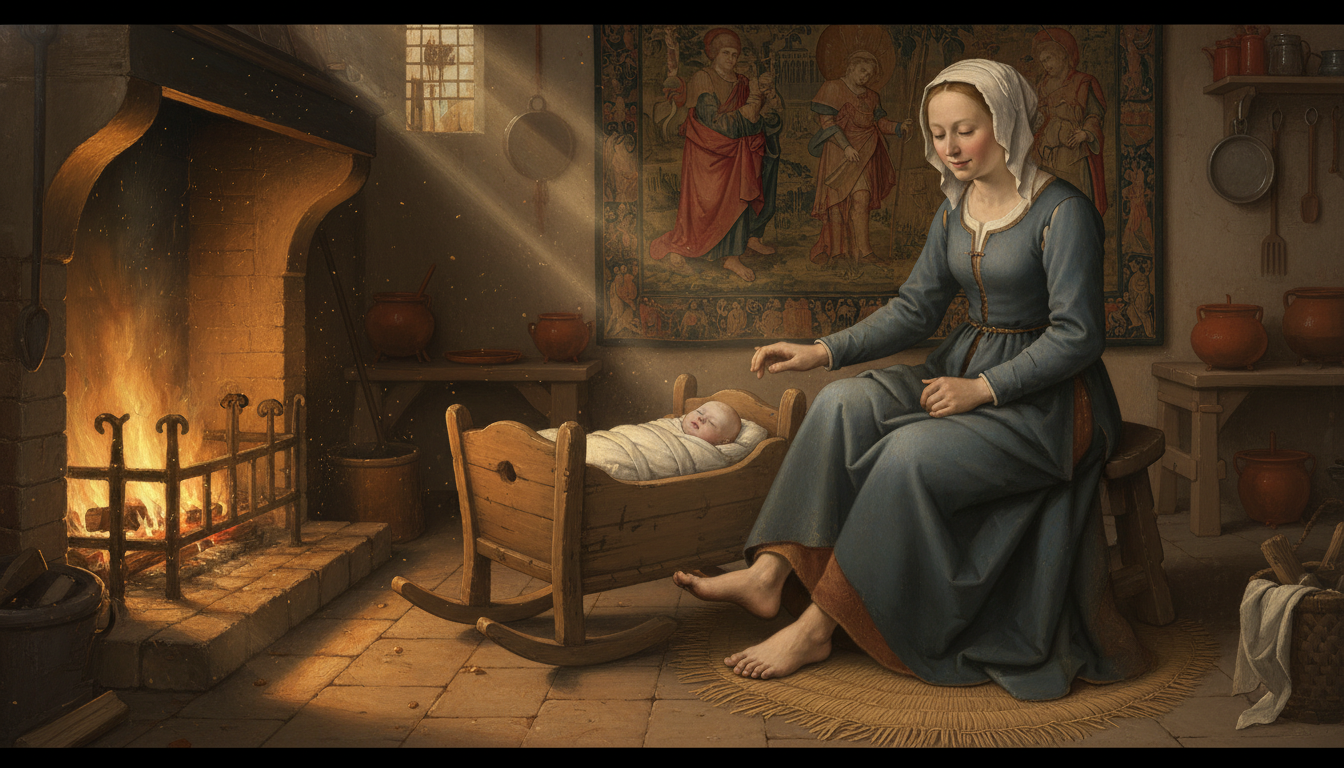
The swaddled form of Thomas John, snug and secure, was not destined for long repose in his mother’s arms alone. Once fed and calm, the next crucial step in his daily routine was sleep, and for this, the medieval cradle was indispensable. It was the year 1420, and while the exact designs varied, the purpose remained universally constant: a safe, designated place for the infant to rest, usually within sight or sound of the mother. Elara’s family, being of modest means, possessed a simple, sturdy wooden cradle, crafted by Thomas’s own hands before their first child, now deceased, had arrived. It was made of rough-hewn oak, smoothed somewhat by years of use, with high sides to prevent a curious toddler or even a foraging rodent from disturbing the precious cargo within.
Crucially, it was a rocking cradle. Two curved rockers formed its base, allowing Elara to gently sway it with her foot, a soothing, rhythmic motion that often proved irresistible to a restless babe. The rocking was not merely a convenience; it was a deeply ingrained practice, believed to replicate the gentle movements the infant experienced in the womb, providing comfort and lulling them into slumber. Many hours were spent by mothers, grandmothers, and even older siblings, seated by the hearth or at a spinning wheel, their foot rhythmically pushing the cradle, a constant, quiet hum pervading the household. Elara would often sing soft, ancient lullabies, their melodies passed down through generations, their words simple tales of birds, flowers, and saints, meant to calm and protect.
The placement of the cradle was strategic. In peasant homes, it was almost always kept close to the mother, often directly beside her bed or near the central hearth where she spent most of her time. This proximity served multiple purposes: it allowed the mother to quickly respond to the baby’s cries, for feeding or comfort; it provided the baby with the warmth from the fire, essential in cold, unheated rooms; and it ensured the baby was never truly alone, always within the sensory world of the family. Babies were an integral part of the bustling household, not sequestered in separate nurseries as might be the case for wealthier families. The sounds of daily life – the clatter of pots, the low murmur of conversation, the rustle of straw – became the background symphony to the infant’s sleep.
In wealthier homes, cradles could be more elaborate, adorned with carvings or draperies. Some even had a dedicated “cradle rocker,” often a younger servant girl or an older woman, whose sole task was to tend to the infant’s sleep. These cradles might be placed in an antechamber adjacent to the mother’s bedchamber, but still within easy reach. Regardless of social standing, the cradle was a symbol of new life and the focal point of the family’s hopes and fears.
Shared sleeping arrangements were also common, especially when the child outgrew the cradle or when the cradle was occupied by a younger sibling. Older infants and toddlers might share a bed with their parents or siblings, a practice driven by necessity (lack of space and beds) and the desire for warmth. While modern safety advice often cautions against co-sleeping, in medieval times, it was a pragmatic and often deeply affectionate practice. The warmth of bodies huddled together was a defense against the cold, and the constant presence of a parent was a comfort.
For Elara, watching Thomas John sleep in his cradle by the fire, his chest rising and falling with soft, even breaths, was a moment of profound peace. The rhythmic creak of the wood, the soft glow of the embers, the quiet contentment of her son – these were the small, precious moments that anchored her in the demanding rhythm of her life. She knew that every hour of undisturbed sleep was a blessing, a moment for her baby to grow and gather strength against the many perils that lay in wait. The cradle, in its simplicity, was a haven, a gentle promise of rest and protection, an enduring testament to the ingenuity and care of medieval mothers. Its gentle sway was not just a mechanism for sleep, but a silent lullaby, a tangible expression of love, rocking her precious child into the hopeful embrace of tomorrow.