Simple Sojourns: Hygiene and Care
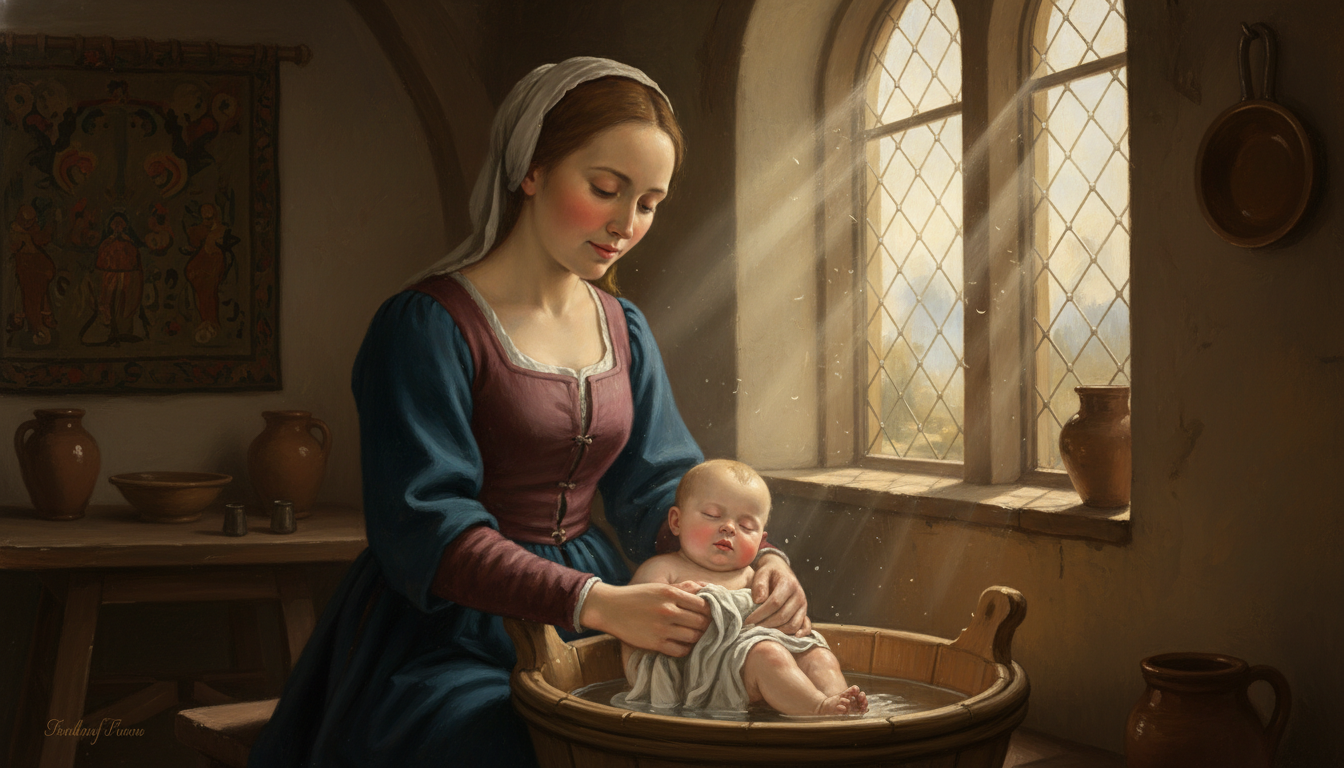
The concept of hygiene in 1450, particularly for infants, bore little resemblance to modern standards, yet medieval mothers diligently employed practices rooted in observation, tradition, and the practical constraints of their environment. For Elara and her now thriving toddler, Thomas John, cleanliness was a constant, if often rudimentary, concern. Water, for common folk, was not easily accessible on demand; it had to be drawn from a well or river, heated over a fire, and was thus a precious commodity reserved for cooking, drinking, and essential washing. Full immersion bathing for infants, as we understand it today, was a rare and occasional event, perhaps once a week or even less frequently, depending on the season and available resources.
Instead of frequent baths, the primary method of keeping Thomas John clean involved localized wiping and changing. Elara would meticulously clean his delicate skin with soft, damp cloths – often scraps of old linen or wool – usually warmed by the hearth. After each feeding or when a soiled cloth was discovered, she would gently wipe away dirt, paying particular attention to creases and folds where moisture and grime could accumulate, leading to chafing or skin irritation. She understood the importance of keeping his skin dry to prevent discomfort and sores. This practice was performed swiftly and carefully, ensuring the baby remained warm and unstressed.
The equivalent of modern diapers were “swaddling clouts” or “nappies,” simple squares or strips of absorbent fabric, typically linen or wool, placed inside the outer swaddling bands or wrapped directly around the baby’s lower body. These cloths, unlike modern disposables, were reused. When soiled, they would be scraped clean of any solid matter, then rinsed in cold water before being boiled in a lye solution – a harsh but effective disinfectant – and finally dried, often by hanging them near the hearth or in the sun. This was a labor-intensive, time-consuming task that fell squarely on the women of the household. Elara spent considerable time each day tending to these cloths, a testament to her dedication to her child’s comfort and health. The faint scent of woodsmoke and lye often clung to the laundered cloths.
Beyond cleansing, a mother’s care extended to ensuring the baby’s comfort in other ways. After wiping, Elara might gently powder Thomas John’s skin with fine, unscented flour or ground herbs, like chamomile, known for its soothing properties. This served to absorb moisture and protect against rashes, a constant battle in the absence of specialized ointments. His hair, often sparse in infancy, would be softly brushed or simply smoothed. His tiny fingernails, when they grew, would be carefully bitten off by Elara, a common and effective method before the advent of tiny scissors, ensuring he didn’t scratch himself.
The overall environment of a medieval home, though, posed significant challenges to infant hygiene. Earthen floors, open fires, the presence of livestock nearby in some dwellings, and a lack of sophisticated sanitation meant a constant battle against dirt, pests, and the spread of disease. Despite these obstacles, mothers like Elara strove to create as clean and safe an environment as possible for their infants. Their methods, born of generations of experience and limited resources, were practical and aimed at preventing visible discomfort and illness.
Elara would often talk to Thomas John during these intimate cleaning rituals, her voice a soft murmur of affection. “There, little one, clean and fresh,” she would coo, as she patted his plump legs dry. These moments, though focused on mundane tasks, were also opportunities for bonding, for gentle touch and reassuring sounds. It demonstrated a profound, unwavering commitment to the well-being of her child, a testament to the enduring love that transcended the simple, challenging realities of medieval life. The simple sojourns of hygiene, meticulously performed, were integral to the daily rhythm of care, protecting the precious fragility of new life in a world that offered few other defenses.