Whispers of Protection: Superstition and Faith
In the year 1370, as in much of the medieval period, the care of an infant extended far beyond the physical realm; it delved deeply into the spiritual and the superstitious. For Elara, ensuring Thomas John’s well-being meant not only diligent feeding and cleaning but also a constant vigil against unseen forces. The medieval world was permeated by a belief in spirits, both benevolent and malevolent, and a profound understanding that the boundaries between the physical and spiritual were thin, especially for the vulnerable newborn. Infant mortality was a brutal reality, often inexplicable by earthly means, leading parents to seek solace and protection through a complex tapestry of Christian faith and ancient folk beliefs.
Immediately after his birth, Thomas John underwent a hurried, informal blessing, but the formal baptism was the cornerstone of his spiritual protection. Performed within days of birth, often by a priest who would rush to the cottage, it cleansed the infant of original sin and welcomed him into the Christian community. It was believed to be a crucial shield against evil spirits and the potential for a “changeling” – a demonic child swapped for the human baby. Elara remembered the baptism vividly: the cold water touched to his forehead, the priest’s solemn words, the chrism oil anointed on his skin. Each act was a spiritual fortification.
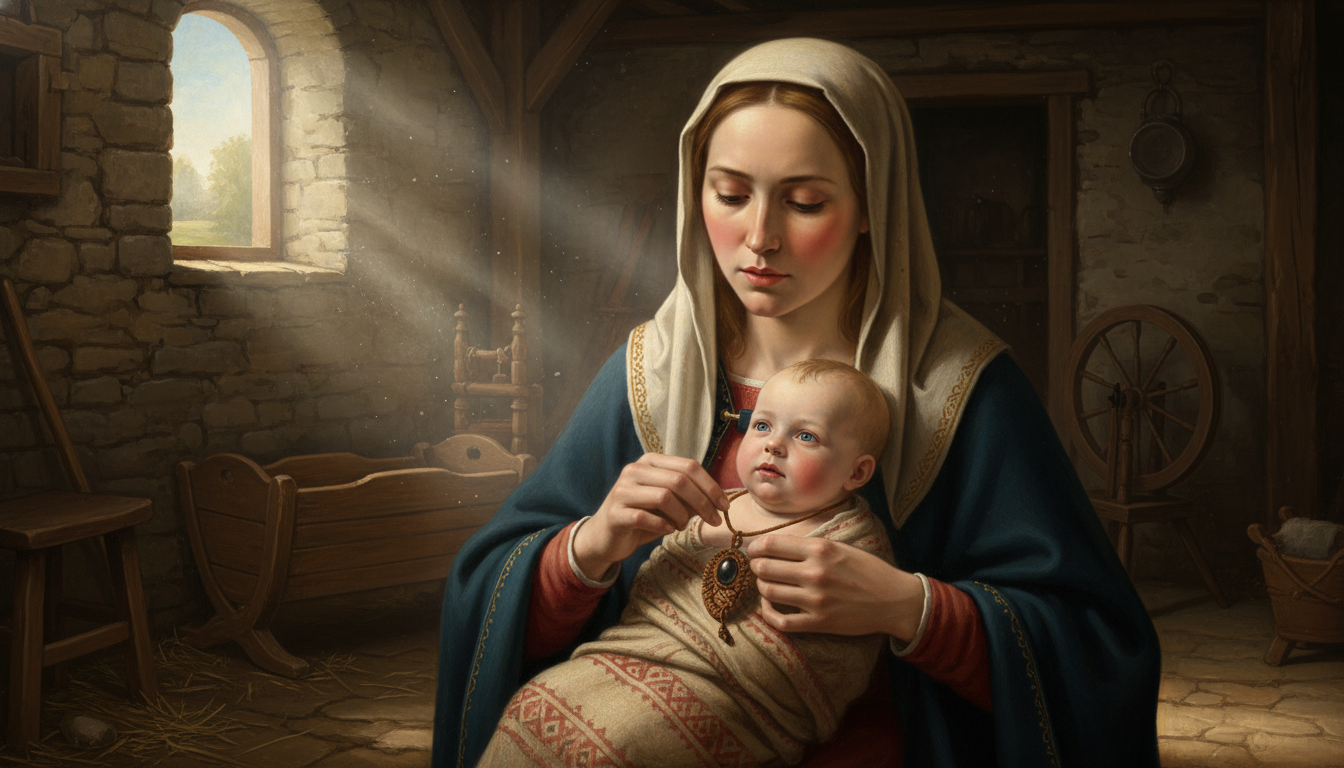
Beyond the formal rites, everyday life was infused with protective rituals. Elara often placed small, sacred objects near Thomas John’s cradle or even tucked them into his swaddling bands. A blessed palm frond from Palm Sunday, a small relic of a saint (if one could be acquired, even a piece of cloth that had touched a relic), or a simple cross carved from wood, were believed to ward off the evil eye or mischievous fairies. Old Maude, the village elder, had given Elara a small, smooth stone, drilled with a tiny hole, instructing her to tie it with red thread around the cradle. “For the fae, child,” she’d whispered conspiratorially, “they cannot cross a boundary marked by the blessed red.” Elara, though devoutly Christian, respected these ancient customs; in matters of her child’s survival, no avenue of protection could be ignored.
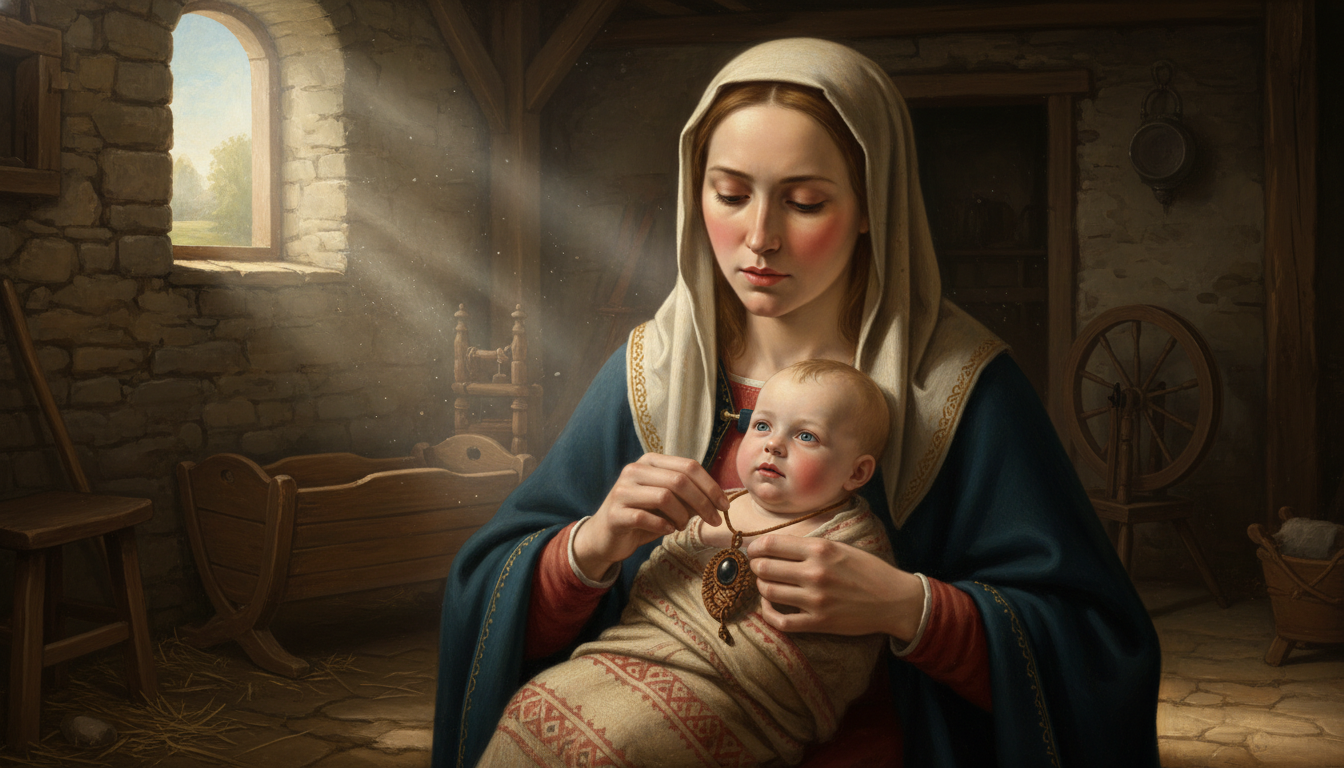
Certain prayers were recited nightly over the sleeping babe, not just the Pater Noster or Ave Maria, but specific appeals to guardian angels and saints known for protecting children, like Saint Nicholas or Saint Margaret. Elara would gently trace the sign of the cross on Thomas John’s forehead as he slept, her lips moving silently, her heart full of earnest supplication. She believed that demons and witches were particularly drawn to the purity of infants, making them prime targets. Therefore, she avoided leaving Thomas John alone, especially at twilight or during the darkest hours, when spirits were believed to roam.
Other superstitious practices included avoiding certain foods during breastfeeding that might “sour the milk” or affect the baby’s temperament, and even avoiding specific days for activities like cutting the baby’s first hair or nails, for fear of bringing bad luck. The first bath might include protective herbs, and the bathwater itself might be carefully disposed of, so as not to be used for malevolent spells. If the baby cried incessantly, beyond natural explanation, it might be attributed to a “piskie” or a lingering evil influence, prompting further blessings or charms.
For Elara, this blend of deep Christian faith and inherited folk wisdom was not contradictory but complementary. Both offered a sense of agency and hope in a world where so much was beyond human control. When Thomas John coughed or fretted, her first instinct might be to pray, then to consult Maude for an herbal remedy, and then to check if the protective amulet was still securely tied. These acts were all expressions of a mother’s desperate love and unwavering commitment to her child’s safety, navigating the complexities of their world by invoking every possible source of protection against visible and invisible threats. The whispers of protection, both sacred and superstitious, were a constant, comforting refrain in the unpredictable symphony of medieval infancy.