Dawn Breaks: The First Chore

As the deepest hour of the Korean Goryeo Dynasty night began its slow retreat, giving way to the subtle, almost imperceptible softening of the sky, the village of Seonam began to stir. It was not a sudden awakening, but a gradual unfolding, a quiet symphony of nascent activity that marked the transition from rest to renewed labor. The first to rise were typically the village elders, their sleep often lighter, their minds accustomed to the cyclical demands of an agrarian life. Old Man Kim, a farmer whose back was bent like a seasoned willow, was usually the very first, his movements slow but deliberate as he emerged from his humble home. The air was cool and damp, carrying the faint, sweet scent of morning dew and the lingering aroma of woodsmoke from the night’s cooking fires.
The stars, once a brilliant tapestry, had begun to fade, replaced by a subtle pearlescent glow on the eastern horizon. Kim’s first chore was always to tend to his livestock: the family’s single cow and a small flock of chickens. He moved with a practiced grace, his hands, gnarled by decades of toil, adept at milking the cow and gathering the fresh eggs. The soft ‘moo’ of the cow and the gentle clucking of the chickens were among the first sounds to break the pre-dawn silence, a comforting promise of the day’s provisions.
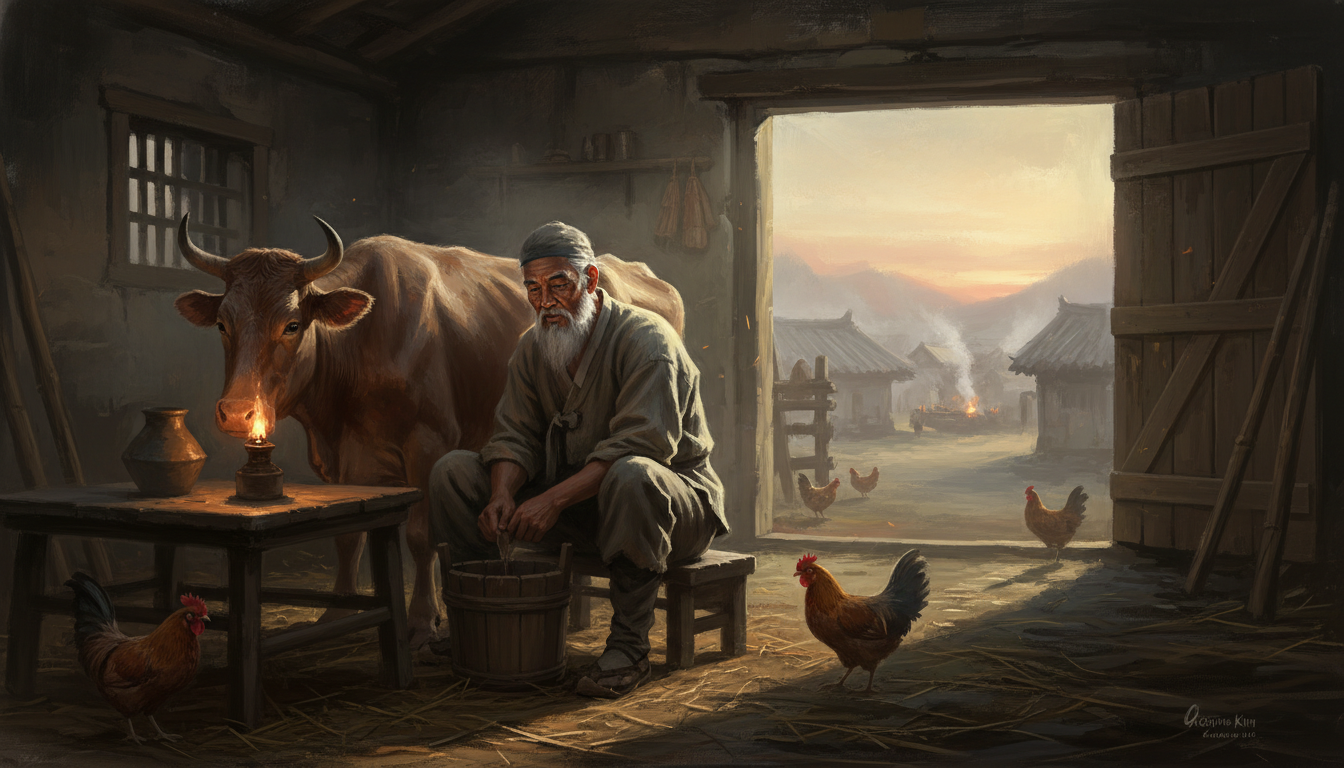
Psychologically, these first chores were more than mere tasks; they were rituals, grounding villagers in the reality of their existence, connecting them to the land and to each other. The cold water on Hye-won’s hands, the warmth of the fresh milk in Kim’s bucket, the fragrant steam of cooking rice—these sensory experiences reinforced their connection to the natural world and the fruits of their labor. There was a quiet dignity in these early morning activities, a sense of purposeful living that transcended the drudgery of the work itself. There was little dialogue, but deep understanding. A glance, a shared sigh, communicated more than words. The shared commitment to the day’s start was a foundational aspect of their communal strength.
As the sky transformed from grey to a pale, hopeful blue, and the sun’s first rays began to paint the eastern peaks, the village truly awoke. Smoke began to curl from every chimney, the scent of breakfast filled the air, and the sounds of human activity grew louder: the distant cry of a hawker preparing his cart, the playful shouts of children just beginning to stir, the cheerful greetings exchanged between neighbors. Kim, having finished his animal chores, would sit down to a simple breakfast with his family, his stomach filled with warm rice porridge, his body refreshed from rest. Hye-won, having completed her water fetching, would help her mother with the meal, her young mind already contemplating the day’s lessons or play.
The transition from the quiet mystery of night to the vibrant activity of day was a seamless, ancient rhythm, a testament to the enduring cycle of life in ancient Asian villages.