Storytelling by Hearthlight

In a secluded village nestled within the misty mountains of Heian Japan, as the cool evening air began to descend, the central hearth became the heart of every home. The farmer, Kenji, his wife, Hana, and their three children—young Ichiro, playful Midori, and the quiet infant, Haru—gathered around the smoldering embers. The only light in their modest wooden dwelling emanated from the fire, casting dancing shadows on the rice paper screens and illuminating the deeply lined face of Kenji’s mother, Grandmother Sato. Her eyes, though dimmed by age, held the spark of countless winters and the wisdom of generations.
This was the hour, after the simple meal of rice, miso, and pickled vegetables had been consumed, when the ancient art of oral storytelling truly came alive, binding the family in an invisible thread of shared heritage and imagination. Grandmother Sato, her voice a soft, melodic murmur, began with a tale of Kitsune, the cunning fox spirit, whose trickery brought both misfortune and lessons to the villagers of old. She described the fox’s gleaming eyes, its human-like laughter echoing through moonlit bamboo groves, and the foolish greed of a merchant who dared to challenge its wit.
Ichiro, a boy of eight, leaned forward, his small hands clasped around his knees, his eyes wide with a mixture of fear and fascination. Midori, a year younger, occasionally giggled at the fox’s mischievous antics, then quickly stifled it, mindful of her grandmother’s steady rhythm. The infant Haru, nestled against Hana’s chest, stirred occasionally, lulled by the gentle cadence of the voice and the warmth of the fire. The narrative was punctuated by long pauses, allowing the imagery to settle, allowing the children’s minds to wander into the mystical realm conjured by Sato’s words.
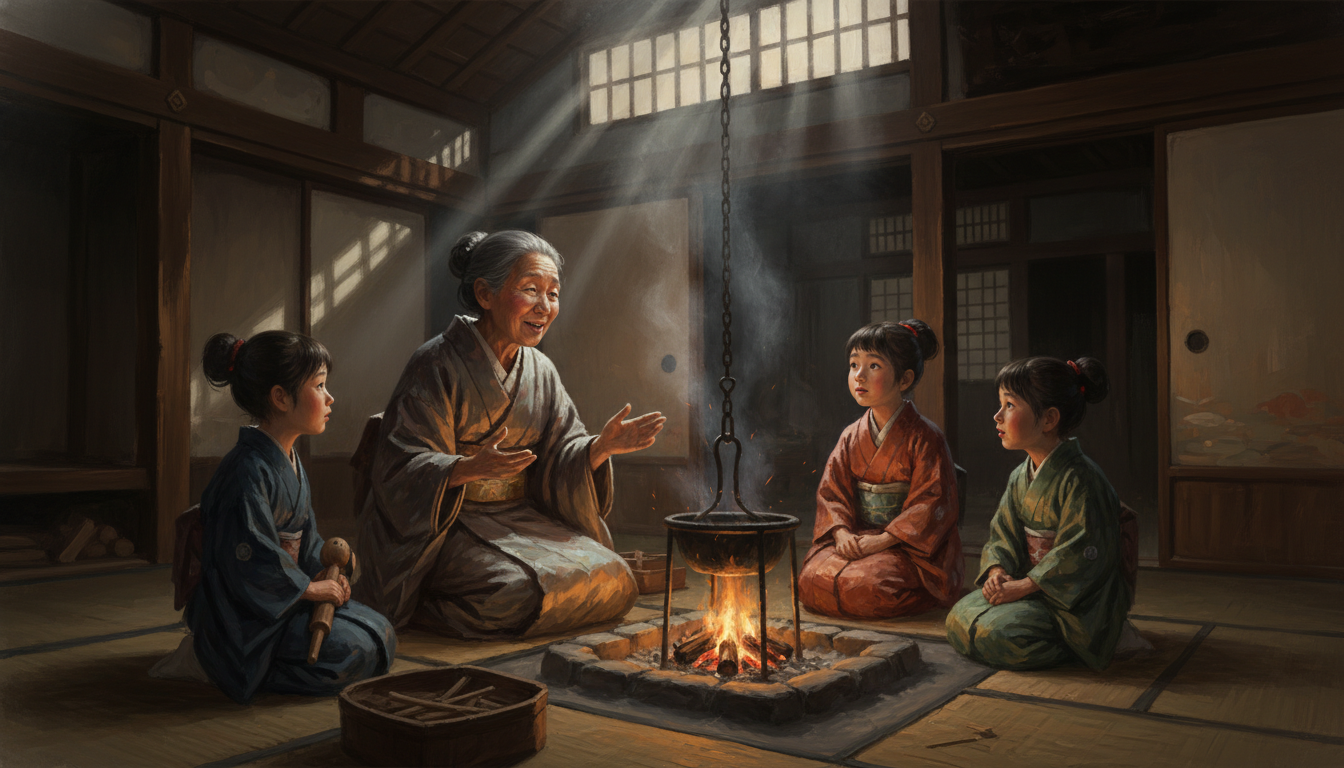
Psychologically, these storytelling sessions were crucial. They were not merely entertainment; they were the primary vehicles for transmitting cultural values, moral lessons, and historical memory. The Kitsune story, for instance, subtly taught humility and respect for the unseen forces of nature. Other tales might recount the bravery of local heroes, the benevolence of kami (deities), or the tragic consequences of envy and deceit. Kenji and Hana, though they had heard these stories countless times, listened with a quiet reverence, occasionally exchanging knowing glances. They understood the profound importance of these narratives in shaping their children’s worldview, instilling a sense of identity and belonging within their community and the vast spiritual landscape of Japan.
The flickering firelight, the creaking of the wooden house in the night wind, and the shared breath of the family created an atmosphere of intimate communion, a sacred space where the past was made present and the future was quietly guided. The dialogue, when it occurred, was often in the form of questions from the children.
“Grandmother, did the fox really turn into a man?” Ichiro would whisper, his voice barely audible above the crackle of the fire.
Sato would smile, a network of wrinkles deepening around her eyes. “Perhaps, little one. The spirits are powerful, and their forms are many. What do you think?” This encouraged critical thinking, even in its nascent form, and fostered a direct connection to the wisdom keeper of the family.
The night outside, dark and mysterious, filled with the rustling of leaves and the distant calls of night birds, seemed to recede, replaced by the vivid landscapes of the stories. As the tales wound down, and sleep began to claim the youngest, a sense of peace settled over the family. The embers glowed, a silent testament to the narratives that had been woven, threads of ancestral wisdom stretching across the chasm of time, preparing the villagers for the world of dreams and the challenges of a new dawn, armed with the lessons of the night.