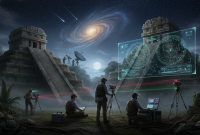
Architects of the Cosmos: Cities as Celestial Instruments
The Classic Period, spanning roughly from 250 to 900 CE, saw the Maya civilization reach its zenith, a golden age of intellectual and architectural achievement. Across the verdant landscape, magnificent city-states like Tikal, Palenque, Copán, and Calakmul rose, adorned with towering pyramids, sprawling plazas, and intricate palaces. These urban centers were not merely hubs of political power or population density; they were meticulously designed cosmic maps, physical manifestations of the Maya’s profound understanding of the universe. Every major structure, every ceremonial courtyard, was often aligned with astounding precision to significant celestial events.
The iconic pyramids, more than just temples or tombs, functioned as sophisticated observatories. Their staircases and facades were frequently oriented to mark the solstices and equinoxes, allowing priests and rulers to track the sun’s precise movements throughout the year. At El Castillo in Chichen Itza, for instance, during the spring and autumn equinoxes, the setting sun casts a shadow that creates the illusion of a serpent (Kukulcan) slithering down the pyramid’s steps – a breathtaking display of architectural and astronomical genius. This wasn’t merely aesthetic; it was a potent demonstration of their leaders’ connection to and control over cosmic forces, reinforcing their divine authority.
Beyond the sun, Maya astronomers meticulously tracked the moon and planets. Cities often featured specific viewing platforms or buildings with precisely measured openings designed to align with the extreme positions of the moon or the heliacal risings and settings of Venus. They understood the complex cycles of celestial bodies, incorporating this knowledge into their religious practices, agricultural planning, and even warfare. The very layout of their urban centers mirrored the heavens, creating an immersive experience where the earthly realm was constantly interwoven with the cosmic. The plazas might represent constellations, and the major thoroughfares, celestial paths.
The sheer scale and accuracy of these alignments are what continue to astound researchers today. To achieve such precision required centuries of dedicated observation, sophisticated mathematical calculations, and an architectural skill that rivaled, and in some cases surpassed, contemporary civilizations elsewhere in the world. They were not just building structures; they were constructing living, breathing instruments that allowed them to synchronize their entire society with the grand clockwork of the cosmos. This era cemented the Maya’s reputation as master architects of both stone and the stars, building enduring monuments to their celestial knowledge that still whisper secrets across the millennia. Their cities stand as silent witnesses to a civilization deeply entwined with the movements of the heavens, constantly seeking to integrate humanity within the vast, awe-inspiring tapestry of the universe.